
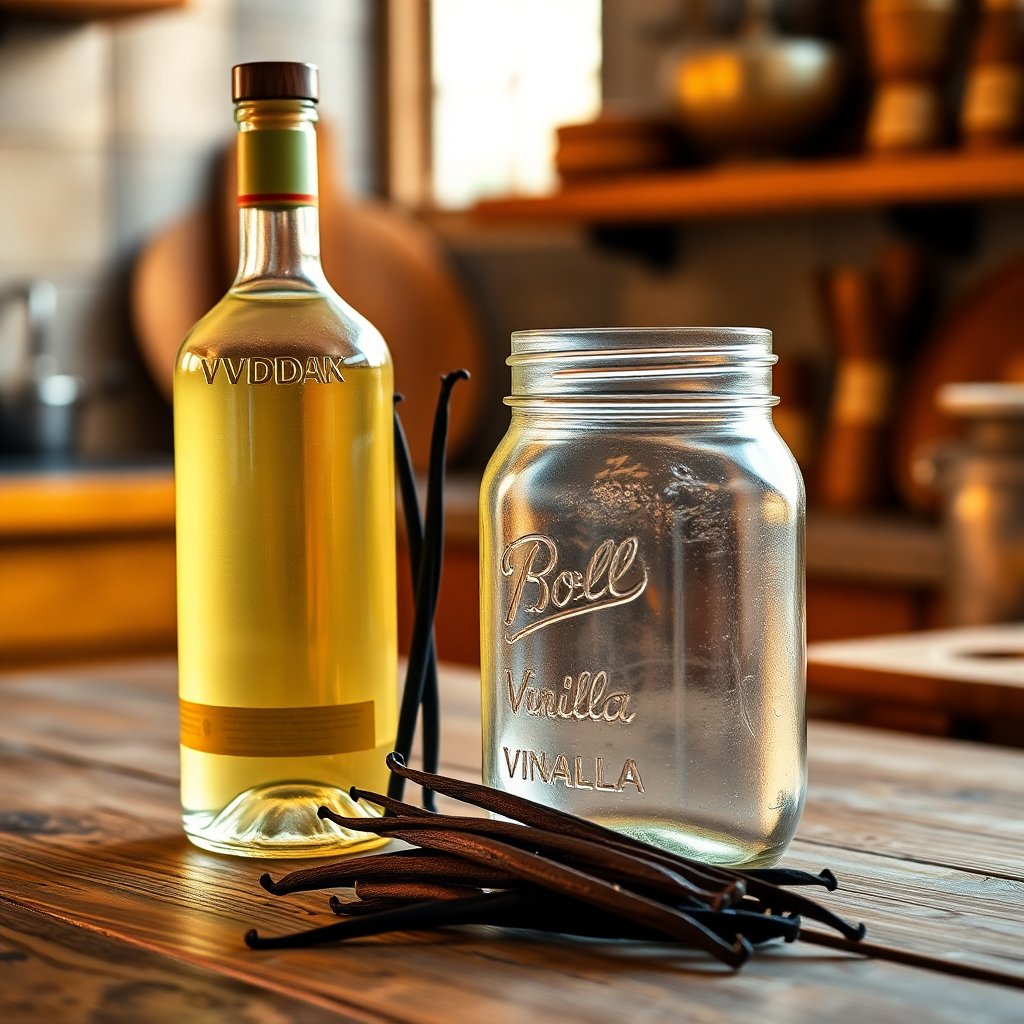
When people first start making vanilla extract, they often overthink the vodka choice. Here's the honest answer upfront: you don't need expensive vodka. But you do need to pay attention to a few things.
Get these right and your extract will be genuinely better than anything you can buy at the grocery store.
Proof Matters More Than Brand
The most important factor in your vodka choice isn't the brand — it's the proof (alcohol content).
Why proof matters: Alcohol is the solvent that extracts the flavor compounds from vanilla beans. Too low and the extraction is incomplete and your extract can go off. Too high and you extract harsh, unwanted compounds.
The sweet spot is 70–80 proof (35–40% ABV). This range:
- Extracts flavor efficiently and fully
- Acts as a preservative (nothing will grow in it)
- Produces a balanced, smooth extract
Don't use:
- Anything below 70 proof (under-extracts, food safety concern over time)
- High-proof spirits like Everclear at full strength (too aggressive; dilute to 80 proof first if you want to use it)
Does Cheap Vodka Make Bad Extract?
No — with one caveat. Cheap vodka that tastes harsh and chemical when you sip it will produce a harsher extract. Not disastrously worse, but noticeably different.
A mid-shelf vodka — something that's smooth enough to drink neat — produces a cleaner, better extract. You don't need Grey Goose. But you probably don't want the very bottom shelf either.
The bottom line on value: After 3–6 months of steeping with quality beans, the vodka character is almost entirely subsumed by vanilla. So while quality matters, it matters less than the quality of your vanilla beans.
Practical recommendation: Something in the $15–$25 range for a 750ml bottle is the sweet spot. Tito's Handmade Vodka is a popular choice and easy to find. Smirnoff No. 21, Absolut, and Ketel One are all solid options.
The Best Vodkas for Vanilla Extract
Tito's Handmade Vodka — Top All-Around Choice
Made from corn (naturally gluten-free), distilled six times, and widely considered one of the cleanest mid-shelf vodkas available. The neutrality is its main virtue for extract-making. Runs $20–25 for 750ml.
Smirnoff No. 21 — Best Budget Performer
At around $12–15 for 750ml, Smirnoff is cleaner than its price suggests. Triple-distilled, charcoal-filtered. Produces a completely acceptable extract that most people can't distinguish from Tito's in finished baked goods.
Absolut — Reliable Mid-Range
Swedish wheat vodka with a clean, slightly creamy profile. Works beautifully for vanilla extract. Around $20 for 750ml.
Kirkland (Costco) Signature Vodka — Best Value for Large Batches
If you're making large batches or gifting extract, Costco's 1.75L bottles offer unbeatable value per ounce. The quality is solid. Stock up when making gift batches.
→ Shop large-format vodka for extract batches on Amazon
Can You Use Other Alcohols?
Yes — and they produce interestingly different results. Once you've made your standard vodka batch, experimenting with alternative spirits is one of the best ways to expand your extract game.
Bourbon: Makes a vanilla bourbon extract with warm, caramel-forward notes. Excellent in chocolate chip cookies and brownies. The vanilla and bourbon flavors complement each other beautifully — they're natural partners. Use an 80-proof bourbon for standard extraction.
Rum (white or dark): White rum gives a cleaner result than you'd expect — nearly as neutral as vodka, with a slight tropical sweetness. Dark rum adds molasses notes that work beautifully in banana bread, rum cake, or anything with warm spices.
Brandy: Produces a slightly sweet, complex extract. Less common but worth experimenting with. Works particularly well with Tahitian vanilla beans.
Glycerin (non-alcohol): If you need an alcohol-free extract, vegetable glycerin works as the solvent. The flavor is a bit different — slightly sweeter — and it takes longer to extract. Good option if you're avoiding alcohol for any reason.
→ Shop dark rum for vanilla extract on Amazon
How Much Vodka Do You Need?
A standard extract recipe uses:
- 1 cup (8 oz) of vodka
- 5–6 vanilla beans (Grade B, split lengthwise)
Scale up proportionally. A 750ml bottle of vodka gives you about 3 cups of extract — roughly enough for 3 standard batches, or one large batch.
If you're making extract to give as gifts (a great idea), grab a set of small glass bottles and a 1.75L handle of vodka. You'll end up with 8–10 gift-worthy bottles.
→ Shop small glass bottles for vanilla extract gifts on Amazon
Vodka vs. Bean Quality: Where to Invest
Here's the most practical advice we can give: buy better beans, not better vodka.
The beans are what determines 80% of your extract's quality. A batch made with premium Grade B Madagascar beans and $15 vodka will outperform a batch made with mediocre beans and $40 vodka every single time. After months of steeping, the vodka is just infrastructure.
Where to put the money: Buy from a reputable bean supplier (fresh, moist Grade B beans with visible seeds), use enough beans (5–6 per cup, not 3), and steep long enough (3–6 months, not 4 weeks).
→ Shop Grade B Madagascar vanilla beans on Amazon
Comparison Table
| Vodka Option | Proof | Approx. Price (750ml) | Best Use | |---|---|---|---| | Tito's Handmade | 80 | $20–$25 | All-purpose standard batch | | Smirnoff No. 21 | 80 | $12–$15 | Budget-friendly quality | | Absolut | 80 | $18–$22 | Mid-range gift batches | | Kirkland (Costco) | 80 | Best value per oz | Large batch or gifting | | Bourbon (80 proof) | 80–90 | $20–$35 | Complementary-flavored extract | | Dark Rum | 70–80 | $15–$25 | Rich, molasses-forward extract |
FAQ
Can I use cooking vodka for vanilla extract? There's no such thing as "cooking vodka" regulated separately from regular vodka. Use regular 80-proof drinking vodka. The quality matters for your extract's final flavor.
What if my vodka has a strong grain flavor? The extraction process will somewhat mute the vodka's own character, but a vodka that's notably grainy or harsh will still influence the extract. Swap for a cleaner, more neutral option.
How long should I steep the beans in vodka? Minimum 8 weeks for a usable extract. Better results at 3–4 months. The best results at 6 months or longer. You can't really over-steep — longer is always better, within reason.
Can I reuse the vanilla beans after making extract? Yes — spent beans still have flavor. Add them to a new batch of vodka (you'll need a longer steeping time) or use them to make vanilla sugar. Many extract makers maintain a "mother jar" that gets topped off with fresh vodka as they use it. See our guide on vanilla pantry staples for more ideas.
Is there a difference between clear and dark extract? The color of your extract indicates age and concentration. Fresh extract is pale and clear. After 2–3 months it starts to amber. A rich, dark brown color (after 6+ months) indicates a fully developed, deeply flavored extract. The color is a reliable indicator of flavor depth.
The Bottom Line
Buy a decent mid-shelf vodka in the 70–80 proof range. Don't overthink it beyond that. The vanilla beans are the variable that matters most — invest there and use respectable but not fancy vodka as your base.
This post contains affiliate links. We only recommend products we've actually used.
As an Amazon Associate we earn from qualifying purchases. This article contains affiliate links; if you buy through them we may earn a small commission at no additional cost to you.