
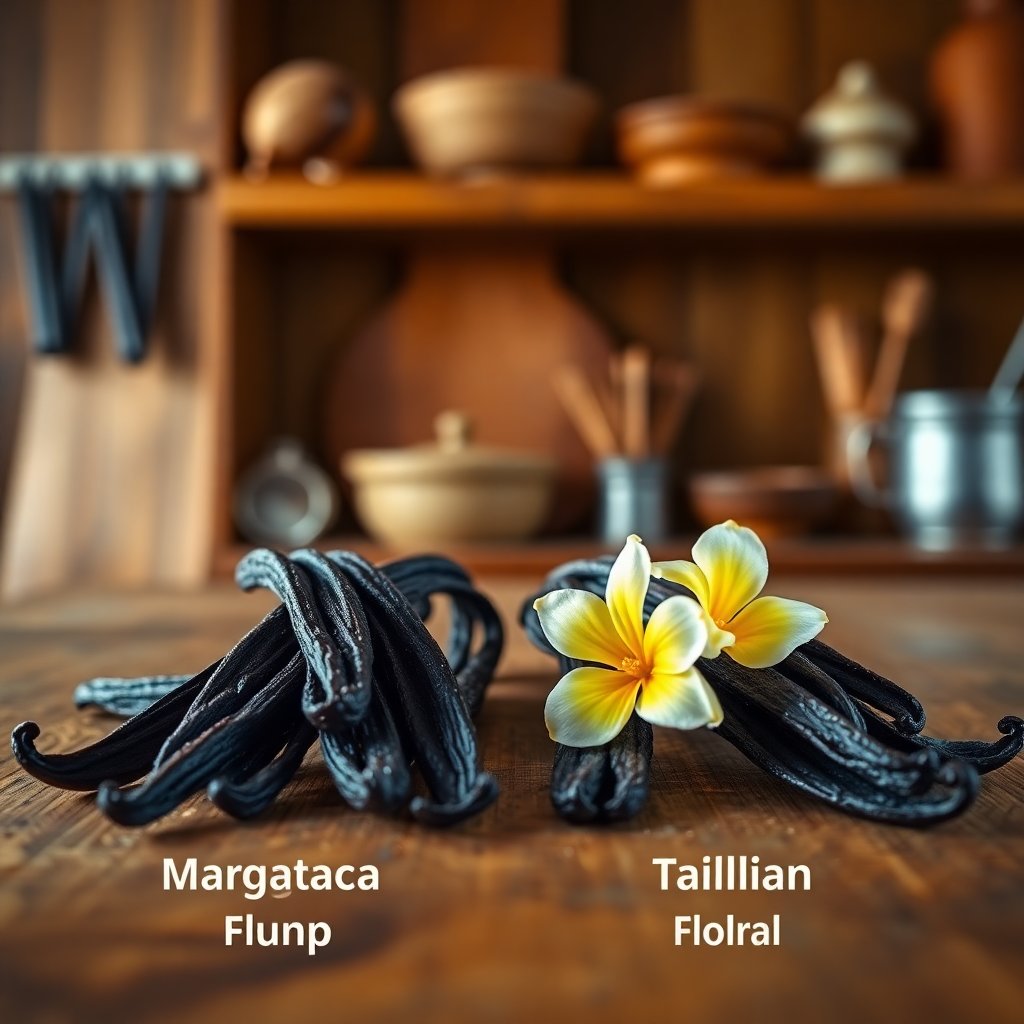
If you've started shopping for vanilla beans, you've probably noticed that most suppliers offer at least two main types: Madagascar and Tahitian. They look similar — dark, wrinkled pods — but they taste noticeably different and work better in different applications.
Here's a practical breakdown of each, plus the situations where one clearly outperforms the other.
Madagascar Vanilla Beans
Madagascar Bourbon vanilla (Vanilla planifolia) is by far the most widely used vanilla in the world, and for good reason. The flavor profile is what most people think of when they think "vanilla" — sweet, creamy, rich, with subtle woody and caramel notes.
These beans come from the island of Madagascar (and neighboring Comoros and Réunion, which are also called Bourbon vanilla for historical reasons — named after the Île Bourbon, now Réunion, where the species was first cultivated outside its native Mexico). The tropical climate and volcanic soil contribute to the distinctive flavor.
Flavor profile: Sweet, creamy, warm, caramel-forward, with a clean vanilla finish. The benchmark for "classic vanilla."
Best for:
- Homemade vanilla extract (the classic choice)
- Baked goods: cookies, cakes, muffins, anything where vanilla is a supporting flavor
- Custards and puddings
- Vanilla ice cream
- Pastry cream and crème anglaise
- Vanilla sugar
→ Shop Madagascar Grade A Vanilla Beans on Amazon
→ Shop Madagascar Grade B (Extract Grade) on Amazon
Tahitian Vanilla Beans
Tahitian vanilla (Vanilla tahitensis) comes from French Polynesia and is a different species than Madagascar. It's noticeably plumper and shorter than Madagascar beans, with a distinctly different flavor: floral, fruity, almost cherry-like, with anise undertones.
The aroma hits you differently. Where Madagascar is warm and cozy, Tahitian is bright and perfume-like. It's polarizing — some bakers love it, others find it too floral for traditional baking. But in the right application, Tahitian vanilla is exceptional.
Flavor profile: Floral, fruity, cherry-like, with anise and licorice undertones. Bright, aromatic, perfume-quality.
Best for:
- Ice cream, panna cotta, or any cold dessert where delicate aromatics shine
- Pastry cream and crème brûlée where you want a more complex vanilla note
- Whipped cream (the floral character is stunning in fresh whipped cream)
- Cocktails or beverages where vanilla is a prominent flavor
- Any dessert where you want the vanilla itself to be interesting, not just "vanilla"
→ Shop Tahitian Vanilla Beans on Amazon
Side-by-Side Comparison
| | Madagascar | Tahitian | |---|---|---| | Species | Vanilla planifolia | Vanilla tahitensis | | Flavor | Sweet, creamy, classic, caramel | Floral, fruity, cherry-like | | Aroma | Warm, cozy, caramel-forward | Bright, perfume-like, anise | | Best use | Baking, extract, everyday vanilla | Custards, cold desserts, cocktails | | Price | Moderate | Usually 20–40% higher | | Availability | Very easy to find | Slightly harder to source | | Bean appearance | Long, thin, flexible | Plumper, shorter, fatter | | Moisture content | Standard | Higher (more oily/moist) |
Direct Application Guide
This is where the decision becomes concrete. Here's what to use when:
Use Madagascar when:
- Making homemade vanilla extract for all-purpose use
- Baking chocolate chip cookies or classic sugar cookies
- Making vanilla birthday cake for anyone who didn't specify
- Stirring into oatmeal, yogurt, or coffee
- Creating a pastry cream that needs to taste familiar and reliable
- The vanilla is a supporting flavor alongside chocolate, fruit, spices
Use Tahitian when:
- Making vanilla ice cream where the vanilla will star
- Creating crème brûlée or panna cotta and you want to show off
- Steeping into whipped cream for a floral fruit tart
- Making a vanilla cocktail or vanilla simple syrup
- Gifting to a food enthusiast who bakes at a serious level
- Preparing anything where you want guests to ask "what IS that flavor?"
Which Makes Better Extract?
Both make excellent extract — but the extracts are genuinely different and not interchangeable.
Madagascar extract: The classic. Warm, sweet, versatile. Works in every recipe that calls for vanilla extract. This is what most commercial vanilla extracts taste like.
Tahitian extract: More floral and fruity than you'd expect. Excellent in cold applications (no-bake desserts, pastry cream, cold brew) and in cocktails. The floral character can be surprising in baked cookies or cakes — good surprising or unexpected surprising, depending on your audience.
Our recommendation: If you're making one extract, make Madagascar. If you want to experiment, make a small batch of Tahitian alongside it and taste them side by side in the same recipe. The difference will teach you more about vanilla than anything you could read.
→ Shop extract-grade Tahitian beans on Amazon
What About Mexican and Indonesian Vanilla?
Worth mentioning briefly for the curious:
Mexican vanilla (Vanilla planifolia): Grown in Veracruz, Mexico — the original home of vanilla. Mexican vanilla has a spicy, slightly smoky profile with hints of clove and chocolate. It's exceptional in mole sauces, chocolate-based desserts, and spiced baked goods. Underused by most home bakers.
Indonesian vanilla (Vanilla planifolia): Earthier and woodsier than Madagascar. Less sweet, with more of a fermented, complex quality. Often used in commercial extracts because of its lower price. Strong and versatile, though not as refined as Madagascar.
Papua New Guinea vanilla (Vanilla planifolia): Very similar to Madagascar with slightly more exotic, fruity notes. Growing in reputation among pastry professionals.
For most home cooks starting out, Madagascar is the right entry point. Mexican and Indonesian are worth exploring once you've built a vanilla baseline.
Buying Tips
For Madagascar beans: Look for Grade A beans that are plump, oily, and at least 5 inches long. Avoid beans that feel brittle or dry — a sign of age. The "givre" (white crystalline coating that develops on very high-quality aged beans) is actually vanillin crystallizing out of the bean — a positive quality sign, not mold.
For Tahitian beans: These are naturally moister and plumper than Madagascar. Look for beans that are well-hydrated and have that distinctive floral aroma even through the packaging. Tahitian beans are often sold in smaller quantities because they're pricier — a pack of 10–15 beans is a good starting point.
Freshness matters more than grade: A fresh Grade A bean purchased from a reputable supplier beats an old "premium" bean every time. Check reviews for mentions of freshness and buy from sellers who turn over inventory regularly.
FAQ
Can I substitute one for the other in recipes? Yes — 1 bean for 1 bean is a valid substitution. The flavor will be different (more floral and fruity with Tahitian vs. creamy and classic with Madagascar), but the substitution works. Most people won't notice unless they're specifically looking for classic vanilla flavor.
Is Tahitian vanilla better or just different? It's genuinely different — not better. Tahitian is prized in high-end pastry for its complex, exotic character. But in everyday baking, that same character can feel out of place. Think of it like choosing a wine variety — "better" depends entirely on what you're making.
Why is Tahitian more expensive? French Polynesia is a smaller growing region with lower yields than Madagascar. Additionally, Tahitian beans are naturally higher in moisture, which makes them heavier and more expensive to ship. The market is also smaller, so economies of scale don't apply the same way.
Can I make vanilla extract from Mexican beans? Yes, and it's excellent. Mexican vanilla extract has a spicy, chocolatey depth that's genuinely special in chocolate-based baked goods. Many serious home bakers maintain a Mexican vanilla extract specifically for chocolate recipes.
What's the "vanilla crisis" I've read about? The vanilla crisis of 2015–2018 was a period of extreme price volatility driven by a cyclone in Madagascar, speculative buying, and growing global demand (particularly from "natural flavors" labeling requirements). Prices peaked at over $600/pound for Grade A beans. Prices have since moderated. It's a reminder that vanilla is a real agricultural commodity subject to real supply risks — which is another argument for stocking up when prices are reasonable.
The Bottom Line
If you're making homemade extract for the first time: Start with Madagascar. It's classic, versatile, and the flavor will work in everything you bake. Most vanilla extract recipes are designed around this profile.
If you want to experiment: Pick up a small batch of Tahitian to compare. Even just splitting a recipe — half Madagascar extract, half Tahitian — teaches you a lot about how vanilla contributes to flavor.
For gifting: Madagascar is a safer choice since the flavor is universally familiar.
This post contains affiliate links. We only recommend products we've actually used.
As an Amazon Associate we earn from qualifying purchases. This article contains affiliate links; if you buy through them we may earn a small commission at no additional cost to you.