
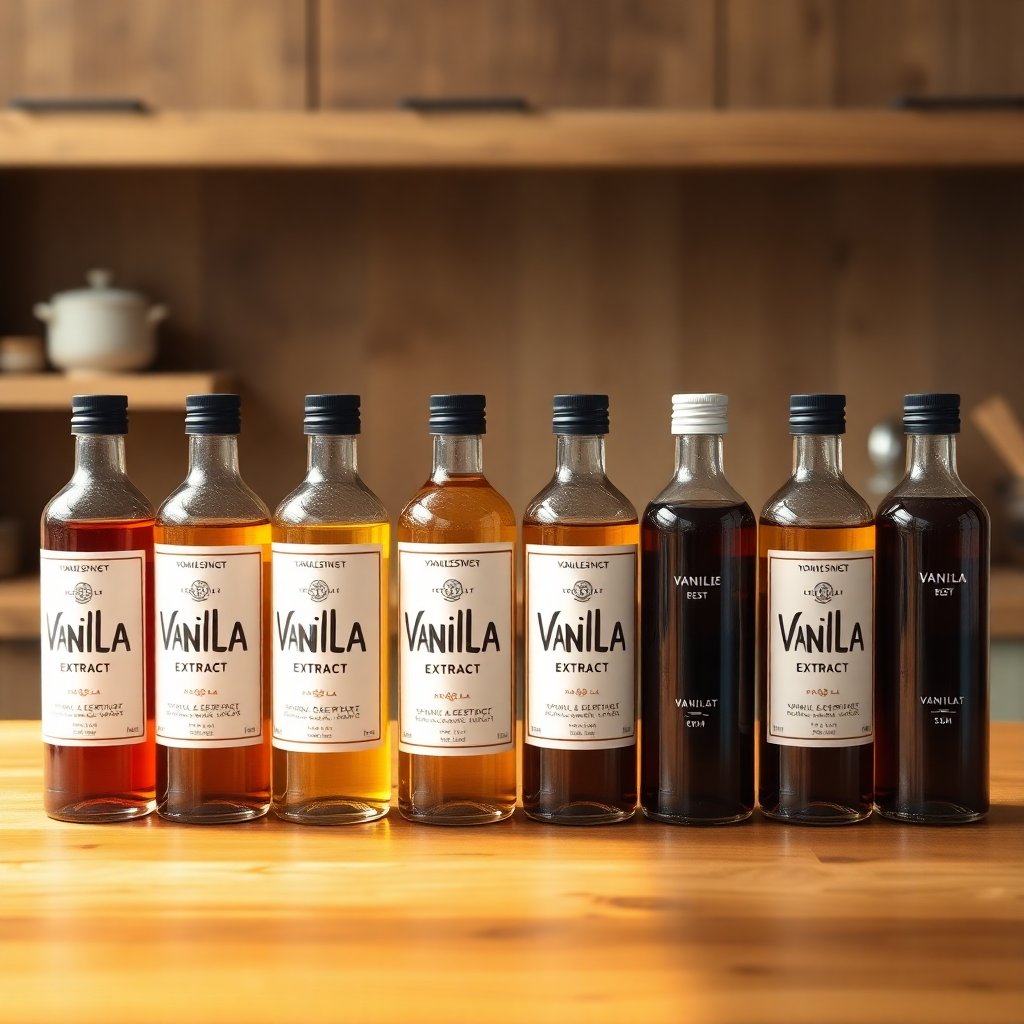
Making your own vanilla extract is ideal — but not always practical when you need a bottle right now. We tested eight commonly available extracts across three applications (vanilla cake, sugar cookies, and pastry cream) to find the ones worth buying.
Here's what we found — including one surprise from the value tier and one popular brand that wasn't worth the hype.
How We Tested
Each extract was used at the same measured amount (1 teaspoon) in identical recipes: a basic yellow butter cake, classic sugar cookies, and vanilla pastry cream. We specifically chose recipes where vanilla is a lead flavor, not a supporting player — because that's where quality differences show.
Tasters evaluated: depth of vanilla flavor, complexity (does it taste like real vanilla or just "vanilla-flavored"), any off-notes, and how the flavor held up after baking.
The Rankings
1. Nielsen-Massey Pure Vanilla Extract — Best Overall
→ Shop Nielsen-Massey on Amazon
Nielsen-Massey is consistently the top recommendation among professional bakers, and after testing it's easy to see why. The flavor is sweet, complex, and genuinely rich — not just "vanilla-flavored." It has subtle floral notes and a creaminess that lifts any baked good.
In the pastry cream test, Nielsen-Massey was in a category by itself. The flavor was deeper and more rounded than every competitor, with what testers described as "a warmth that lingers." In the butter cake, the difference was subtle but present — a richer vanilla background that made the whole cake feel more considered.
It's not cheap — the 4-ounce bottle costs more than some full-size bottles of competitors. But buying the larger 8- or 16-ounce bottle brings the price per use down significantly.
Best for: Pastry cream, vanilla cake, crème brûlée, any recipe where vanilla is the star.
2. Rodelle Pure Vanilla Extract — Best Value
Rodelle surprised us. At roughly half the price of Nielsen-Massey, it delivered a bold, assertive vanilla flavor with a slightly syrupy richness. Some testers found it slightly more intense than Nielsen-Massey — not necessarily worse, just different. Where Nielsen-Massey is elegant and refined, Rodelle is bold and direct.
In the sugar cookie test, several testers preferred Rodelle. The more assertive flavor held up beautifully to the high heat and butter, coming through as a clear, unambiguous vanilla note. If you bake in large quantities and don't want to spend Nielsen-Massey prices on every batch, Rodelle is the answer.
Best for: Cookies, banana bread, recipes with strong competing flavors (brown butter, spices), large-batch baking.
3. Simply Organic Pure Vanilla Extract — Best Organic Option
→ Shop Simply Organic on Amazon
Clean, mild, and floral — Simply Organic is the most delicate extract in our test. It uses Madagascar Bourbon beans and has a lighter flavor profile that works beautifully in anything subtle: whipped cream, light sponge cake, or anything where vanilla shouldn't overpower.
It's certified organic if that matters to you, and the price is fair for the quality. In the pastry cream test, it produced a more delicate result than Nielsen-Massey — lovely if you want vanilla as a background note rather than a lead character.
Best for: Whipped cream, panna cotta, delicate cakes, recipes where vanilla is supporting rather than starring.
4. Watkins Pure Vanilla Extract — Best Everyday Option
Watkins has been making vanilla extract since 1868 and their pure extract is a solid everyday performer. Sweeter and more straightforward than Nielsen-Massey, it's the extract you can buy in bulk and use without thinking. Widely available and consistently good.
The 11-ounce bottle at most warehouse stores gives you excellent value per use. The flavor is pleasant but lacks the complexity of the top two — fine for everyday baking, not what you'd reach for in a showcase dessert.
Best for: Everyday baking, recipes where vanilla is one of many flavors, high-volume use.
5. McCormick Pure Vanilla Extract — Widely Available, Gets the Job Done
McCormick is what most people grew up with, and it's fine. It has a bolder, more assertive flavor with what testers described as "rummy notes" — a slightly boozy quality that can be pleasant in chocolate recipes but feels a bit raw in vanilla-forward ones.
It works well in chocolate cake and brownies where vanilla plays a supporting role. At its price point and availability, it's a reasonable pantry staple, though we'd choose Rodelle over it at a similar price point.
Best for: Chocolate recipes, baked goods where vanilla supports other flavors.
Brands We Tested That Didn't Make the Cut
Trader Joe's Pure Vanilla Extract: Decent but inconsistent batch-to-batch. In one testing round it was quite good; in another it tasted thin. Availability depends on your location.
Costco/Kirkland: The large bottles are excellent value for the price per ounce, and the quality is solid if unspectacular. Good if you bake in very large quantities and prioritize economy.
Imitation Vanilla (Badia, McCormick imitation): We tested these as a control. The synthetic vanillin flavor is one-dimensional and develops a slightly bitter, chemical edge in high-heat applications. There's no reason to use imitation vanilla — the price gap with real extract has narrowed enough that pure extract is accessible at every price tier.
Best Vanilla Extract for Specific Baking Needs
The "best" extract depends on what you're making. Here's how our picks break down by situation.
Best Bulk Vanilla Extract for High-Volume Baking
If you bake constantly — or run a small cottage bakery — buying 4-ounce bottles gets expensive fast. For bulk, Watkins (available in 11- and 16-ounce bottles) and Kirkland Signature (Costco's own, sold in large bottles) offer the lowest cost per ounce without dropping to imitation quality. If you want the top-tier flavor at bulk sizing, Nielsen-Massey's 32-ounce bottle brings its per-teaspoon cost down to roughly the level of a mid-tier 4-ounce bottle — the single best value move if Nielsen-Massey is your house vanilla.
→ Shop bulk vanilla extract on Amazon
Best Clear Vanilla Extract for White Frostings
Pure vanilla extract is always brown — the color comes from the beans and the aging process, and it will tint white buttercream, royal icing, and wedding-cake frosting a faint ivory. When you need a pure white result, clear vanilla (technically a clear imitation vanilla, since real extract can't be colorless) is the practical choice. It won't match pure extract for depth, but in a sugar-heavy frosting the difference is minimal and the clean white color is worth it. This is the one situation where we recommend a clear imitation over pure extract.
→ Shop clear vanilla extract on Amazon
Best Budget Vanilla Extract
You don't need to spend Nielsen-Massey money to get real, good vanilla. Rodelle delivers roughly 90% of the flavor at about half the price and is our overall value pick. Watkins is a rung below on complexity but is pure extract at a genuinely low price and is the best pick if you're watching every dollar. Skip imitation vanilla entirely — the price gap has narrowed to the point where there's no reason to.
Comparison Table
| Brand | Flavor Profile | Best Use | Price Range (4 oz) | |---|---|---|---| | Nielsen-Massey | Rich, complex, floral | Pastry cream, showcase desserts | $12–$18 | | Rodelle | Bold, assertive, syrupy | Cookies, large-batch baking | $6–$10 | | Simply Organic | Delicate, mild, clean | Whipped cream, light cakes | $8–$12 | | Watkins | Sweet, straightforward | Everyday baking | $5–$9 | | McCormick | Bold, slightly boozy | Chocolate recipes | $5–$8 |
What to Avoid: Imitation Vanilla
Imitation vanilla (also called "vanilla flavoring") uses synthetic vanillin rather than real vanilla beans. It's cheaper, but:
- The flavor is flat and one-dimensional
- It can turn slightly bitter in high-heat baking
- It lacks the 200+ flavor compounds that make real vanilla complex
The price difference between imitation and real extract has narrowed significantly. There's very little reason to use imitation vanilla anymore, especially with options like Watkins and Rodelle available at accessible price points.
Buying Tips
Buy larger bottles. The price-per-ounce difference between a 4-ounce and 16-ounce bottle is significant. Nielsen-Massey's 32-ounce bottle brings the per-use cost down to a level that makes it competitive with Rodelle.
Look for "pure" on the label. "Vanilla extract" without the word "pure" can legally contain imitation vanillin. Always buy pure vanilla extract.
Store properly. Vanilla extract should be stored at room temperature in a cool, dark location — not in the refrigerator (which causes cloudiness) or near heat. Properly stored, it lasts indefinitely.
The homemade option. All of these extracts are good — but none of them match the depth and complexity of homemade extract made with quality beans and left to steep for 3–6 months. If you haven't tried it, our beginner's guide to making vanilla extract walks you through the whole process.
FAQ
Is Nielsen-Massey really worth the price? For everyday baking, Rodelle or Watkins are excellent and save money. For any recipe where vanilla is the star flavor — vanilla cake, crème brûlée, pastry cream — Nielsen-Massey is worth it. Buy the large bottle to make the price per use more reasonable.
Can I taste the difference between brands in finished baked goods? In blind tastings, most people can distinguish Nielsen-Massey from budget options in vanilla-forward recipes. In recipes where vanilla is one of many flavors (chocolate chip cookies, spice cake, brownies), the differences are much harder to detect. Match your extract quality to how much the vanilla matters in the recipe.
How long does vanilla extract last? Pure vanilla extract lasts indefinitely when stored properly. The FDA doesn't require an expiration date on pure vanilla extract, and a well-sealed bottle can retain quality for 10+ years. Imitation vanilla has a shorter shelf life of around 2–4 years.
What does "Madagascar Bourbon" vanilla mean? It refers to vanilla beans grown on the island of Madagascar and neighboring islands in the Indian Ocean (historically associated with the Bourbon region). It's the most common and widely available vanilla type — the classic sweet, creamy profile most people identify as "vanilla flavor." Not related to bourbon whiskey.
Is it worth buying organic vanilla extract? If you prioritize organic certification, Simply Organic is a good option and the quality is genuine. For pure flavor without organic consideration, Nielsen-Massey and Rodelle are better picks at comparable or lower prices.
What's the best clear vanilla extract for baking? Real pure vanilla extract is always brown, so any "clear" or "white" vanilla is technically a clear imitation vanilla. It's the right pick for one specific job: white buttercream, royal icing, and wedding-cake frostings where you don't want the ivory tint that pure extract leaves behind. For everything else — cakes, cookies, custards — use pure extract, because clear imitation can't match the depth of real vanilla.
What's the best bulk vanilla extract? For high-volume baking, Watkins and Costco's Kirkland Signature give the lowest cost per ounce while still being pure (not imitation) extract. If you want premium flavor at bulk pricing, Nielsen-Massey's 32-ounce bottle drops the per-use cost dramatically versus its 4-ounce size — the smartest value buy if you bake often and want the best flavor.
This post contains affiliate links. We only recommend products we've actually used.
As an Amazon Associate we earn from qualifying purchases. This article contains affiliate links; if you buy through them we may earn a small commission at no additional cost to you.