
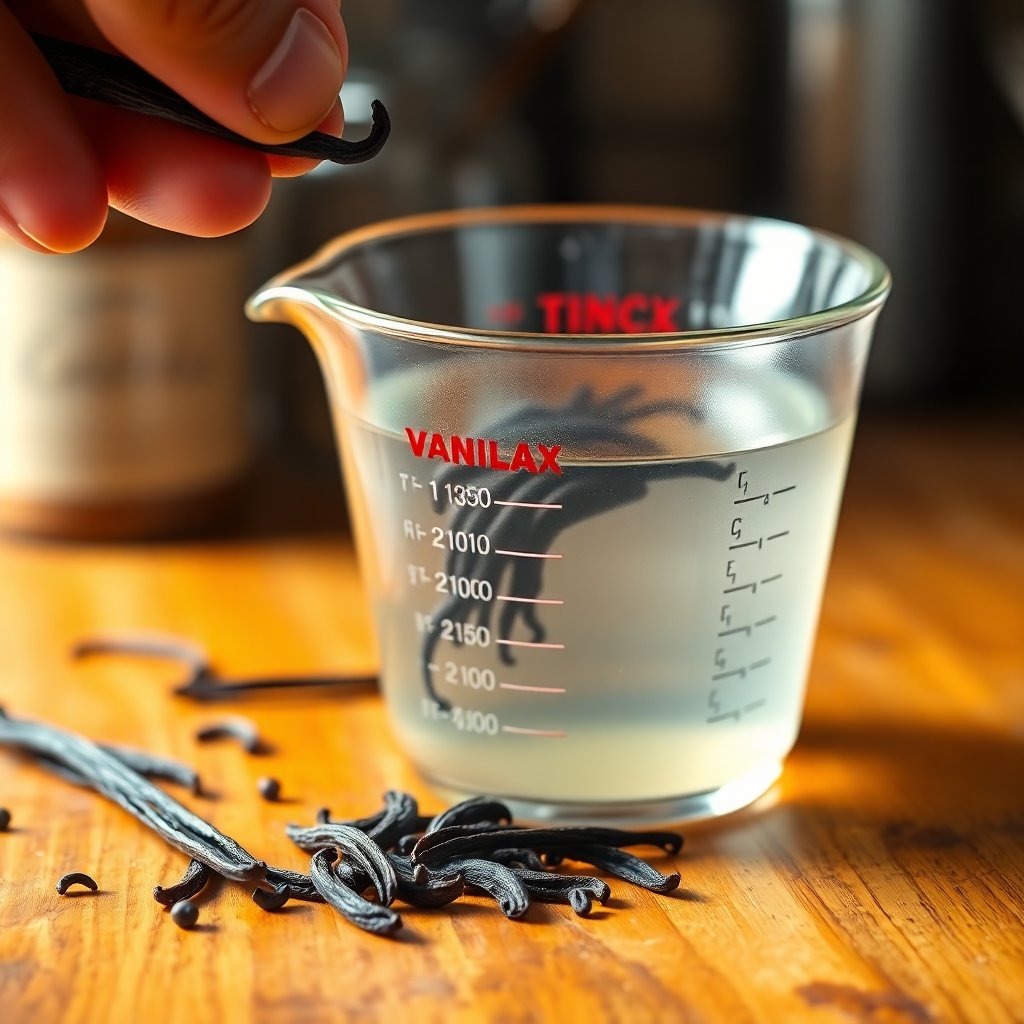
If you've read different vanilla extract recipes, you may have noticed they don't all agree on the ratio. Some say 3 beans per cup, some say 6, some say 8. The FDA even has an official standard. Let's sort this out once and for all.
The FDA Standard
The FDA defines "pure vanilla extract" as containing at least 13.35 ounces of vanilla beans per gallon of liquid at 35% ABV. Translated to a home-kitchen scale, that's roughly 5–6 beans per cup (8 oz) of vodka.
That's your baseline. If you use at least 5–6 beans per cup, your homemade extract meets the legal definition of "pure vanilla extract."
The Practical Sweet Spot: 5–6 Beans Per Cup
For most home bakers, 5–6 Grade B beans per cup of 80-proof vodka will produce an extract that:
- Meets the technical definition of "pure vanilla extract"
- Has a rich, noticeable vanilla flavor after 8–12 weeks
- Reaches its best flavor after 3–6 months of steeping
- Tastes noticeably better than most store-bought extracts
→ Shop Grade B Madagascar beans on Amazon
Grade B beans (also called extract-grade) are ideal here — they're less visually perfect than Grade A but their vanilla compound content is just as high, often higher. They're also usually cheaper. For a full breakdown, see our Grade A vs Grade B vanilla beans guide.
What Happens If You Use Fewer Beans?
With 2–3 beans per cup you'll get something that technically smells like vanilla but is noticeably weak. It'll take much longer to develop any real flavor, and even after 6 months it may still taste thin compared to quality store-bought extract.
The math is unforgiving: vanilla extract flavor is directly proportional to the mass of beans in solution. There's no shortcut. Fewer beans = weaker extract, period.
Don't shortchange the beans. They're the most important variable, and they're the point.
What Happens If You Use More Beans?
More beans means more flavor, faster. Some extract makers use 8–10 beans per cup for a double-strength extract. This isn't wrong — double-strength extract is a real thing, used professionally, and it's useful if you want to use half the amount in recipes.
Benefits of double-strength:
- Stronger vanilla flavor per teaspoon used
- Faster time to usable extract (6–8 weeks vs. 12 for single-strength)
- More economical in recipes that call for large amounts of extract
Important: Label your bottle so you remember what you made. Using double-strength extract in a recipe expecting single-strength will give you noticeably more vanilla character — which might be exactly what you want, but you should do it intentionally.
Does Bean Size Matter?
Yes. Vanilla beans vary significantly in length — from about 4 inches to 8 inches. If your beans are on the shorter side, use more of them. A general guideline:
- Long beans (6–8 inches): 5 beans per cup
- Medium beans (5–6 inches): 6 beans per cup
- Short beans (4–5 inches): 6–7 beans per cup
When in doubt, err toward more beans. You can always dilute with more vodka later (just extend the steeping time). You can't add vanilla flavor back once it's weak.
Batch Size Reference Table
| Extract Amount | Vodka Needed | Standard Beans (5-6/cup) | Rich Beans (7-8/cup) | |---|---|---|---| | 4 oz (small bottle) | ½ cup | 3–4 beans | 4–5 beans | | 8 oz (standard batch) | 1 cup | 5–6 beans | 7–8 beans | | 16 oz (double batch) | 2 cups | 10–12 beans | 14–16 beans | | 32 oz (large batch) | 4 cups | 20–24 beans | 28–32 beans | | 1 gallon (bulk/gifting) | 16 cups | 80–96 beans | 112–128 beans |
For gifting purposes, the 16 oz batch (2 cups vodka, 10–12 beans) is the sweet spot — it makes four 4-oz gift bottles at reasonable cost.
→ Shop 4-oz glass gift bottles on Amazon
The Grade A vs Grade B Question
Grade A beans are plump, moist, and high-quality — they're best for recipes where you scrape and use the seeds directly (ice cream, crème brûlée). They work for extract too, but you're paying for moisture content and visual appeal that's wasted in extract-making.
Grade B beans have lower moisture content and are specifically designed for extract-making. The vanilla compound (vanillin) concentration is similar to or higher than Grade A per gram of bean, and they cost meaningfully less.
Recommendation: Use Grade B for extract, Grade A for everything else.
→ Shop Grade A beans | → Shop Grade B beans
How to Prep Your Beans
Getting the most out of your beans requires a simple prep step: splitting them open.
- Split lengthwise: Use a sharp paring knife to slice each bean down the middle, but don't cut all the way through. You want a "butterfly" effect — the bean opens up like a book.
- Scrape the seeds into the jar: Some makers scrape the seeds (the black vanilla caviar inside) directly into the vodka; others leave the seeds in the pod. Scraping exposes more surface area and speeds extraction. Both work.
- Submerge fully: Make sure all beans are covered by vodka. If a bean floats above the surface, it won't extract properly. Use a small piece of parchment paper to press them down, or trim the beans to fit your jar.
The Steeping Timeline
The ratio gets you started, but time is what finishes the job. Here's what to expect:
Weeks 1–3: The vodka begins to turn pale golden. Light vanilla scent when you open the jar. Still boozy and underdeveloped.
Weeks 4–6: Noticeable amber color. You can detect real vanilla flavor, but it's thin. Some people start using it here — it works, but it's not what it will become.
Weeks 8–12: True extract emerges. Rich amber color. A teaspoon in your recipe will make a noticeable difference. This is the minimum for a finished extract.
Months 3–6: Full development. The alcohol character is fully integrated with the vanilla. Complex, warm, layered. This is when homemade extract becomes genuinely better than store-bought.
6+ months: You've made something special. Keep topping off the jar with fresh vodka as you use it — the beans continue contributing flavor for 1–2 years.
Topping Off: The Running Extract Method
Once you've made your first batch, consider running a perpetual extract:
- Start with a 16–32 oz jar, well-loaded with beans
- As you use extract, top off with fresh vodka
- Every 6–12 months, add a few fresh beans to replace exhausted ones
- Never empty the jar completely
This method maintains a consistently rich extract indefinitely and is how many serious home bakers operate.
FAQ
Can I make vanilla extract faster with more beans? More beans does accelerate extraction somewhat, and double-strength ratios produce a usable extract in 6–8 weeks. But the full development of flavor complexity takes time regardless of ratio. More beans shortens the timeline; patience delivers the full quality.
Should I shake the jar while it's steeping? Yes — shaking once a week helps distribute the vanilla compounds throughout the liquid. You don't need to be aggressive about it, but a gentle shake each time you think of it helps.
Can I use whole beans (not split) for extract? You can, but splitting dramatically increases the surface area exposed to alcohol and speeds extraction. Whole beans produce extract, just more slowly and with less efficiency. Always split for best results.
What if my extract smells mostly like alcohol after 8 weeks? Either you need more time, you used too few beans, or the beans were low quality. If it's been 8 weeks, let it go another month. If it's still weak at 12 weeks, the beans may be old or thin — add 2–3 fresh beans and wait again.
Can I use Mexican or Indonesian beans instead of Madagascar? Yes, with different flavor results. Mexican beans have a spicy, clove-like profile. Indonesian beans are earthier and stronger. Madagascar is the classic "vanilla" flavor. Any variety works for extract; choose based on how you want the extract to taste. See our Madagascar vs Tahitian vanilla beans guide for more on variety differences.
Quick Reference
| Goal | Beans per Cup | |---|---| | Standard extract (meets FDA) | 5–6 beans | | Rich, full-flavored extract | 6–7 beans | | Double-strength extract | 8–10 beans | | Budget (minimum acceptable) | 4 beans |
This post contains affiliate links. We only recommend products we've actually used.
As an Amazon Associate we earn from qualifying purchases. This article contains affiliate links; if you buy through them we may earn a small commission at no additional cost to you.